Nuclear power in Spain: what could it mean for your electricity bill?
Spain extended Almaraz to 2030 while solar and wind keep breaking records. We explain what each technology actually does for the grid — and what it can realistically mean for your bill.
Published 8 September 2026
Spain is in the middle of a major transformation of its electricity system.
Solar and wind power are expanding quickly. Battery storage is growing. Electricity demand is rising. At the same time, Spain is still working towards a gradual phase-out of its nuclear power plants.
Then, in August 2026, one important decision changed the conversation.
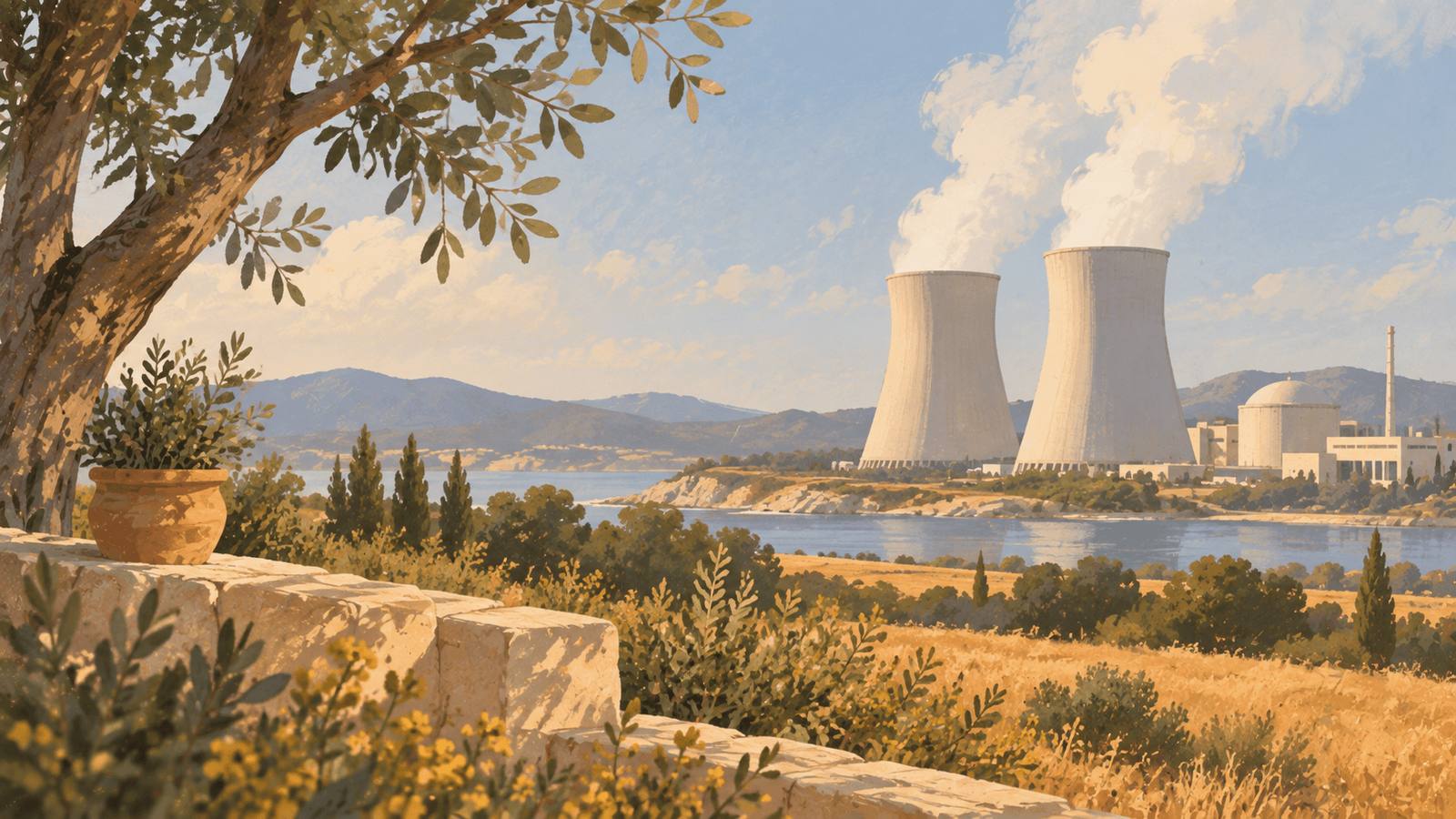
The Spanish government renewed the operating authorisation for the two reactors at the Almaraz nuclear power plant until 8 June 2030. The decision does not cancel the broader plan to phase out Spain's nuclear fleet by 2035, but it has brought a familiar question back into focus:
What role should nuclear power play in Spain's energy future — and what could that mean for electricity prices?
For households, this matters. But probably not for the reason you might think.
The real question is not simply whether nuclear power is "cheap" or "expensive". It is how nuclear, solar, wind, storage, gas and the electricity grid work together — and how that combination eventually affects the price consumers pay.
Spain already gets more than half of its electricity from renewables
Before looking at nuclear, it helps to understand where Spain's electricity system stands today.
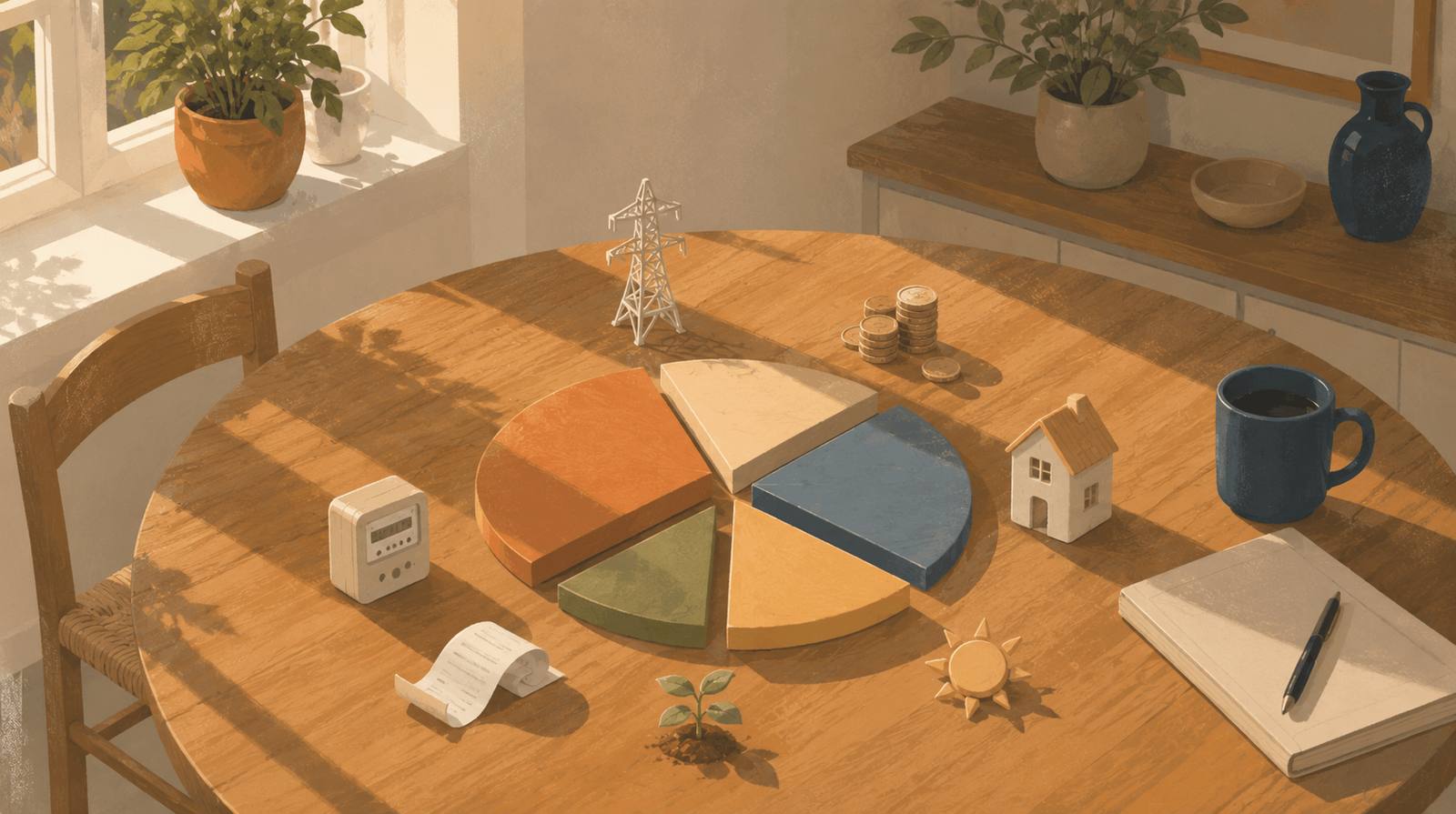
According to Red Eléctrica, renewables produced 55.5% of Spain's electricity in 2025. Including estimated generation from self-consumption, the renewable share rose to 56.6%.
Wind was the largest individual generation technology at 21.6%. Nuclear accounted for 19.0%, solar photovoltaic for 18.4%, combined-cycle gas for 16.8% and hydro for 12.4%. Overall, 75.5% of electricity generation came from technologies without CO₂-equivalent emissions.
Wind
- Share of generation in 2025
- 21.6%
Nuclear
- Share of generation in 2025
- 19.0%
Solar photovoltaic
- Share of generation in 2025
- 18.4%
Combined-cycle gas
- Share of generation in 2025
- 16.8%
Hydro
- Share of generation in 2025
- 12.4%
Other technologies
- Share of generation in 2025
- 11.8%
Renewables total
- Share of generation in 2025
- 55.5%
| Energy source | Share of generation in 2025 |
|---|---|
| Wind | 21.6% |
| Nuclear | 19.0% |
| Solar photovoltaic | 18.4% |
| Combined-cycle gas | 16.8% |
| Hydro | 12.4% |
| Other technologies | 11.8% |
| Renewables total | 55.5% |
The direction of travel is clear: Spain is becoming increasingly dependent on renewable generation, particularly solar and wind.
That is a major advantage. But it also creates a challenge.
Solar electricity can be very cheap — but it is not always available
Imagine a sunny afternoon in July.
Spain has huge amounts of solar generation available at the same time, while electricity demand may not yet be at its daily peak.
Now move forward several hours.
The sun has gone down. Solar generation drops sharply, but households are still using air conditioning, cooking, charging cars and running appliances.
That is one of the central challenges of a renewable-heavy electricity system:
electricity needs to be available when people need it, not only when the weather provides it.
That is why Spain is investing not just in more generation, but also in batteries, pumped-storage hydro, transmission infrastructure and other forms of flexibility.
In 2025, storage technologies helped integrate 9,213 GWh of electricity into the Spanish system, up 6.2% from 2024. Red Eléctrica also reported around 10 GW of new wind and solar capacity during the year.
The future electricity system therefore is not simply "solar instead of nuclear".
It is increasingly about building a system where different technologies perform different jobs.
What does nuclear power add?
Nuclear has one characteristic that makes it particularly interesting in this debate:
it can produce large amounts of electricity continuously, regardless of whether the sun is shining or the wind is blowing.
The International Energy Agency describes nuclear as a low-emissions and dispatchable source of electricity that can complement variable renewable generation.
That makes nuclear fundamentally different from solar and wind.
Spain currently has seven operating reactors at five sites. In 2025, nuclear generated around 19% of the country's electricity.
This is why the interesting question is not necessarily:
"Nuclear or renewables?"
It is:
"How much firm, low-carbon generation does Spain need alongside its renewables?"
Why is Spain extending Almaraz?
Spain's nuclear phase-out has been planned for years.
The government's existing planning envisages the orderly shutdown of the nuclear fleet between 2027 and 2035. The 7th General Radioactive Waste Plan is aligned with that schedule.
But on 14 August 2026, the Spanish Official State Gazette published the renewal of the operating authorisation for the two Almaraz reactors.
Both units can now operate until 8 June 2030, subject to their safety and regulatory conditions.
This is an extension of existing capacity, not an announcement of a new nuclear construction programme.
That distinction matters.
Spain is effectively saying that at least some existing nuclear capacity will remain available for longer while the rest of the electricity system continues to evolve.
Existing nuclear plants and new nuclear plants are not the same economic question
This is where conversations about nuclear costs often become confusing.
Existing reactors
An existing nuclear plant has already absorbed most of the upfront construction investment.
Keeping an existing reactor operating for longer can therefore be economically attractive, provided the plant remains safe and the necessary investments are justified.
The IEA recently estimated average generation costs of around €45 per MWh for a 20-year lifetime extension of existing nuclear reactors in the European Union. It described lifetime extensions, subject to independent safety reviews, as a highly cost-effective way of supplying low-emissions electricity.
New reactors
Building a new nuclear plant is a completely different proposition.
New projects are highly capital-intensive, take years to develop and build, and carry significant financing and construction risks.
The IEA highlights long construction periods, large upfront investments and the risk of cost overruns as important challenges for new nuclear projects.
So you can reasonably argue:
Keeping an existing nuclear plant open may help keep low-carbon generation on the system.
Without automatically concluding:
Building many new nuclear plants would make Spanish electricity cheaper.
Those are two very different claims.
Does nuclear power actually make electricity cheaper?
This is probably the most important question for households.
And the honest answer is:
it can, but it does not automatically do so.
To understand why, you need to understand how the Spanish wholesale electricity market works.
In the day-ahead market, generators submit offers and the market clears by matching supply and demand. The marginal unit needed to meet demand helps determine the market-clearing price.
In simplified terms, low-cost generation can reduce the amount of more expensive generation required to meet demand.
Gas matters here because combined-cycle gas plants can be called upon when other generation is insufficient. When gas prices are high, wholesale electricity prices can also rise.
This is one reason why having more low-carbon generation available can put downward pressure on wholesale prices.
But there is another side to the story.
Renewables can also push electricity prices down
Spain's rapid growth in solar and wind is not only about cutting emissions.
When large amounts of renewable electricity are available, they can put downward pressure on wholesale prices. Spain increasingly experiences periods with very low — and sometimes zero or negative — wholesale prices.
The complication is that these periods do not always coincide with the hours when households use the most electricity.
That creates an increasingly important distinction between:
how much electricity costs on the market
and
how much electricity costs when you actually use it.
For consumers, that distinction can matter just as much as the generation mix.
See your real cost
What is your bill actually costing you?
Upload your Spanish energy bill and get a free, independent breakdown.
What did electricity cost in Spain in 2025?
According to OMIE, the average day-ahead wholesale electricity price in the Spanish zone was €65.29 per MWh in 2025, compared with €63.04 per MWh in 2024.
2024
- Average day-ahead wholesale price
- €63.04/MWh
2025
- Average day-ahead wholesale price
- €65.29/MWh
| Year | Average day-ahead wholesale price |
|---|---|
| 2024 | €63.04/MWh |
| 2025 | €65.29/MWh |
But this is important:
the wholesale electricity price is not your electricity bill.
Taxes, regulated network charges, supplier margins and the commercial structure of your tariff all affect the final amount a household pays.
That means a change in the generation mix does not translate one-for-one into a change in your monthly bill.
The 2025 blackout shows why the electricity system matters
Spain's nuclear debate was also intensified by the major Iberian blackout on 28 April 2025.
It is tempting to turn the event into a simple story about renewable energy or nuclear power.
The final investigation by ENTSO-E found something much more complicated.
The expert panel concluded that the blackout resulted from a combination of interacting factors, including oscillations, gaps in voltage and reactive-power control, differences in voltage regulation practices, rapid output reductions and generator disconnections, and uneven stabilisation capabilities.
The key takeaway is not that "renewables caused the blackout" or that "nuclear would have prevented it".
It is that a modern electricity system needs enough generation, flexibility, grid infrastructure and system-stability capabilities to remain secure as the generation mix changes.
Spain's electricity future is unlikely to be one technology
Spain's future electricity system will probably be a mix of technologies with different roles.
Solar can generate enormous amounts of electricity during daylight hours.
Wind can produce power at different times of day and night.
Hydro provides both generation and flexibility.
Batteries and pumped storage can shift electricity from times of high renewable production to periods of higher demand.
Gas plants can provide backup and flexibility, although reducing reliance on gas remains an important part of decarbonisation.
And nuclear can provide a stable source of low-carbon generation for as long as existing plants remain safe and economically viable.
The European Commission and the IEA increasingly treat nuclear and renewables as complementary components of a low-carbon electricity system rather than mutually exclusive choices.
What does all of this mean for your electricity bill?
This is where the issue becomes much more personal.
Keeping more nuclear capacity online could affect wholesale electricity prices by keeping additional low-carbon generation available and reducing the need for more expensive generation at certain times.
But it does not mean that your household electricity bill will automatically fall.
Your bill is influenced by several factors:
Wholesale electricity prices
- Why it matters
- Reflect supply, demand and the generation mix
Your tariff
- Why it matters
- Determines how market and other costs are passed on to you
When you use electricity
- Why it matters
- Prices can vary significantly between hours
How much you use
- Why it matters
- Consumption directly affects the energy component
Contract conditions
- Why it matters
- Fixed and variable tariffs behave differently
Taxes and regulated charges
- Why it matters
- Added to the underlying energy cost
| Factor | Why it matters |
|---|---|
| Wholesale electricity prices | Reflect supply, demand and the generation mix |
| Your tariff | Determines how market and other costs are passed on to you |
| When you use electricity | Prices can vary significantly between hours |
| How much you use | Consumption directly affects the energy component |
| Contract conditions | Fixed and variable tariffs behave differently |
| Taxes and regulated charges | Added to the underlying energy cost |
And as Spain's electricity mix becomes more renewable, when you use electricity can become almost as important as how much you use.
A household with flexible consumption may be able to move some electricity use — for example EV charging, laundry or other discretionary demand — towards cheaper hours.
That is one reason the future of electricity is not only about producing more electricity.
It is also about using electricity more intelligently.
So, should Spain keep its nuclear power plants open?
There is no simple yes-or-no answer.
Keeping existing reactors operating for longer can provide a source of low-emissions electricity without the huge upfront investment required for new nuclear construction.
At the same time, nuclear power comes with real challenges: safety requirements, radioactive waste, decommissioning and the high capital costs associated with new projects.
Spain also needs to continue investing in renewable generation, storage, networks and system stability.
The most useful question is therefore not:
"Is nuclear good or bad?"
It is:
"What combination of technologies gives Spain reliable, affordable and low-carbon electricity at the lowest overall system cost?"
That is a much harder question — but it is the one that matters.
The bottom line for Spanish households
Spain does not necessarily have to choose between nuclear and renewables.
Solar and wind can provide large amounts of low-carbon electricity when conditions are favourable. Nuclear can provide continuous generation. Storage can move electricity through time. Stronger grids can move it between locations. Flexible consumers can shift some demand.
The goal is not to find one perfect source of electricity.
The goal is to build a system that is reliable, affordable and less dependent on fossil fuels.
And while decisions about nuclear plants and energy policy happen at government and industry level, households do not have to wait for the energy transition to finish before looking at their own electricity costs.
Because the biggest saving on your next electricity bill may have less to do with which technology wins Spain's energy debate — and more to do with whether your current electricity tariff actually fits the way you use electricity.
What this means for your own bill
Nuclear plants, storage and grid upgrades are decided far above your meter. Three things on your bill are not.
- Your tariff type. Fixed prices ignore what the market does; market-linked prices follow it hour by hour. Indexed and dynamic contracts in Spain explains which suits which household.
- Your contracted power. Most Spanish homes pay for more kW than they ever use. Why your potencia contratada is probably wrong shows how to check it.
- The rest of the bill. Standing charges, unused extras and appliance habits usually beat any energy-policy headline: how to lower your electricity bill in Spain.
The April 2025 Iberian blackout is a reminder that grid stability itself ends up in consumer prices — we traced that cost in one year on from El Apagón. And if you generate your own electricity, our solar panels in Spain guide covers surplus compensation, which changes the maths again.
Frequently asked questions
Is Spain phasing out nuclear power? Spain's current planning still envisages an orderly phase-out of the nuclear fleet between 2027 and 2035. However, in August 2026, both Almaraz reactors received an operating authorisation extension until 8 June 2030.
How much of Spain's electricity comes from nuclear power? Nuclear generated around 19% of Spain's electricity in 2025, according to Red Eléctrica.
How much of Spain's electricity comes from renewable energy? Renewables produced 55.5% of Spain's electricity in 2025. Including estimated self-consumption generation, the figure was 56.6%.
Is nuclear electricity cheaper than solar? There is no single answer. Existing nuclear plants can be relatively cost-effective to keep operating, while new nuclear construction is capital-intensive. Solar can produce very cheap electricity when the resource is available, but its output varies by time and weather. The cost of storage, grids and balancing the whole system also matters.
Will nuclear power make my electricity bill cheaper? It can influence wholesale prices, but there is no guarantee that a nuclear extension will translate directly into a lower household bill. Your final bill also depends on your tariff, consumption, taxes and regulated network charges.
When is electricity cheapest in Spain? It depends on the market and your tariff. Wholesale prices can vary substantially between hours, particularly as solar output changes. On tariffs that reflect market prices, shifting flexible consumption towards cheaper periods can reduce costs.
See your real cost
What is your bill actually costing you?
Upload your Spanish energy bill and get a free, independent breakdown.
See your real cost
What is your bill actually costing you?
Upload your Spanish energy bill and get a free, independent breakdown.
Check my billFree · No account needed · Results in ~30 seconds